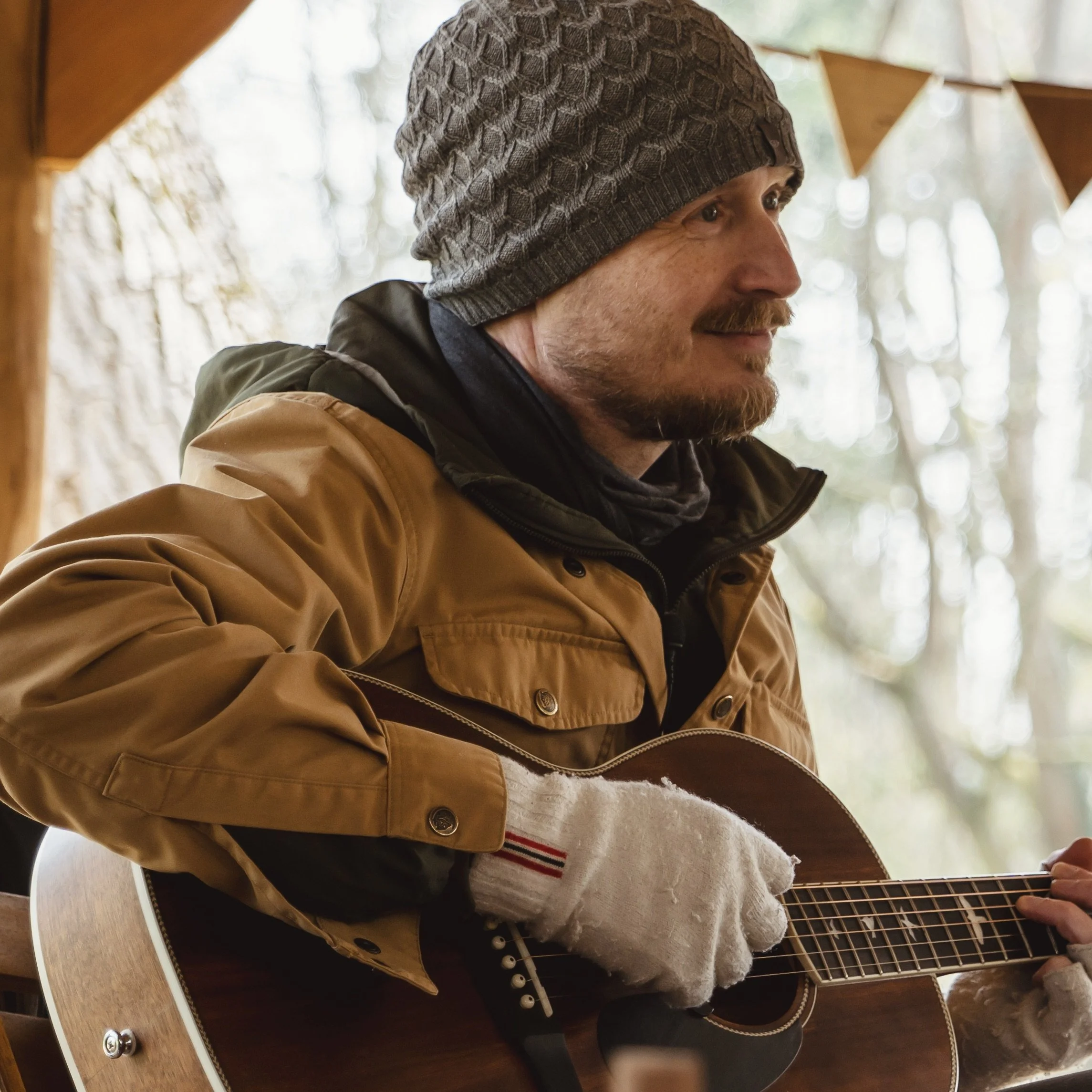
Safe and Sound in the Woods
It starts with safety
At Sound in the Woods, we don’t begin with music.
We begin with how it feels to arrive.
Before anyone joins in, shares, or creates, something more fundamental is already happening; The body is quietly assessing the space:
Is this somewhere I can let my guard down?
If the answer is uncertain, people naturally hold back. Not out of reluctance, but out of instinct.
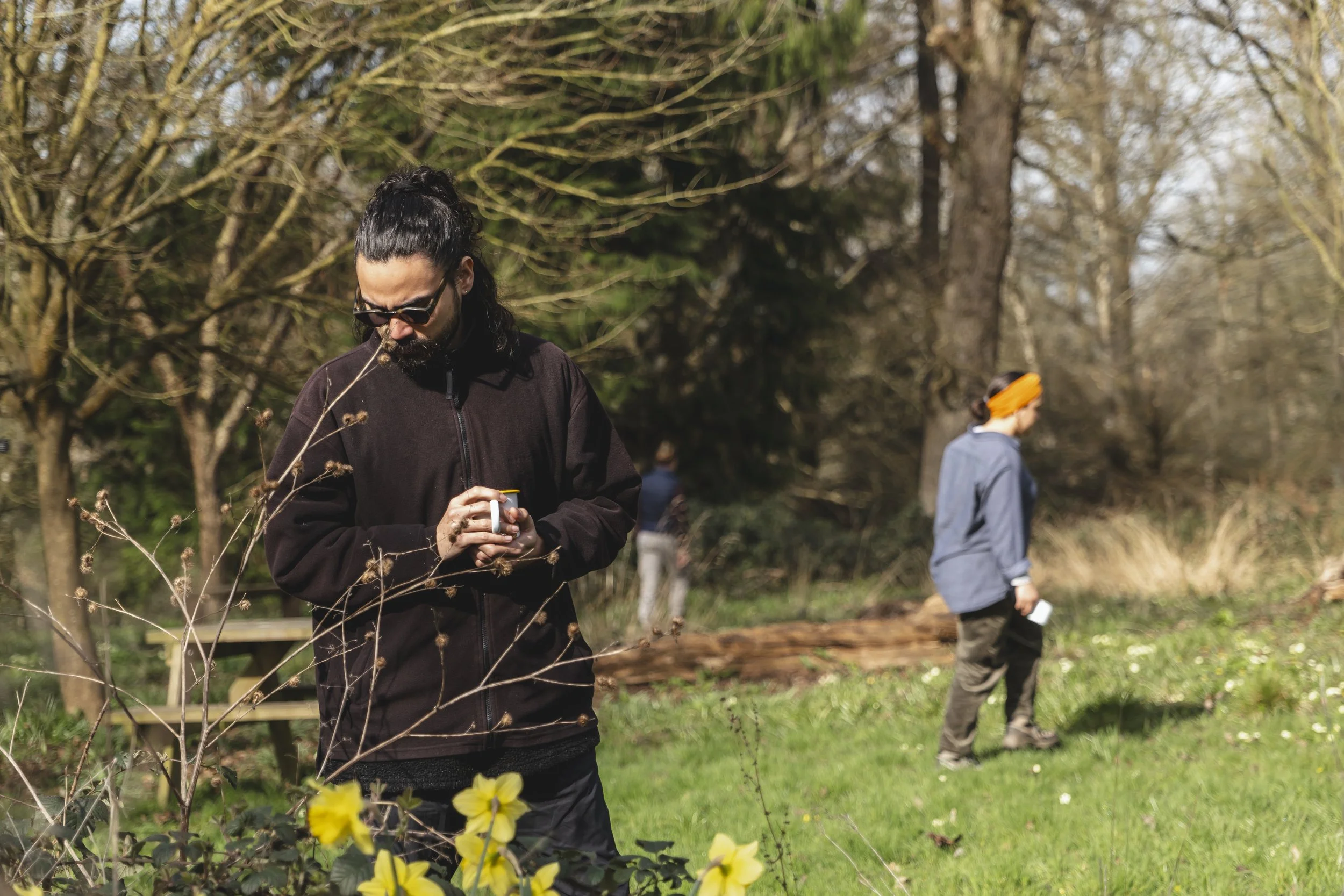
Participants ‘arriving’ in the space and tuning into their senses.
The hidden barrier to creativity
When that underlying sense of ease isn’t there, people naturally hold back.
If they contribute, they do so cautiously. If they engage, it’s with a filter.
People take fewer risks, there are fewer unexpected ideas, less spontaneity.
Instead, there’s a quiet internal dialogue: People ask themselves: Is this the right thing to say? Will this sound okay?
In professional settings, this often gets mistaken for disengagement.
In reality, it’s what’s causing this is the absence of the conditions that allow people to truly be themselves.
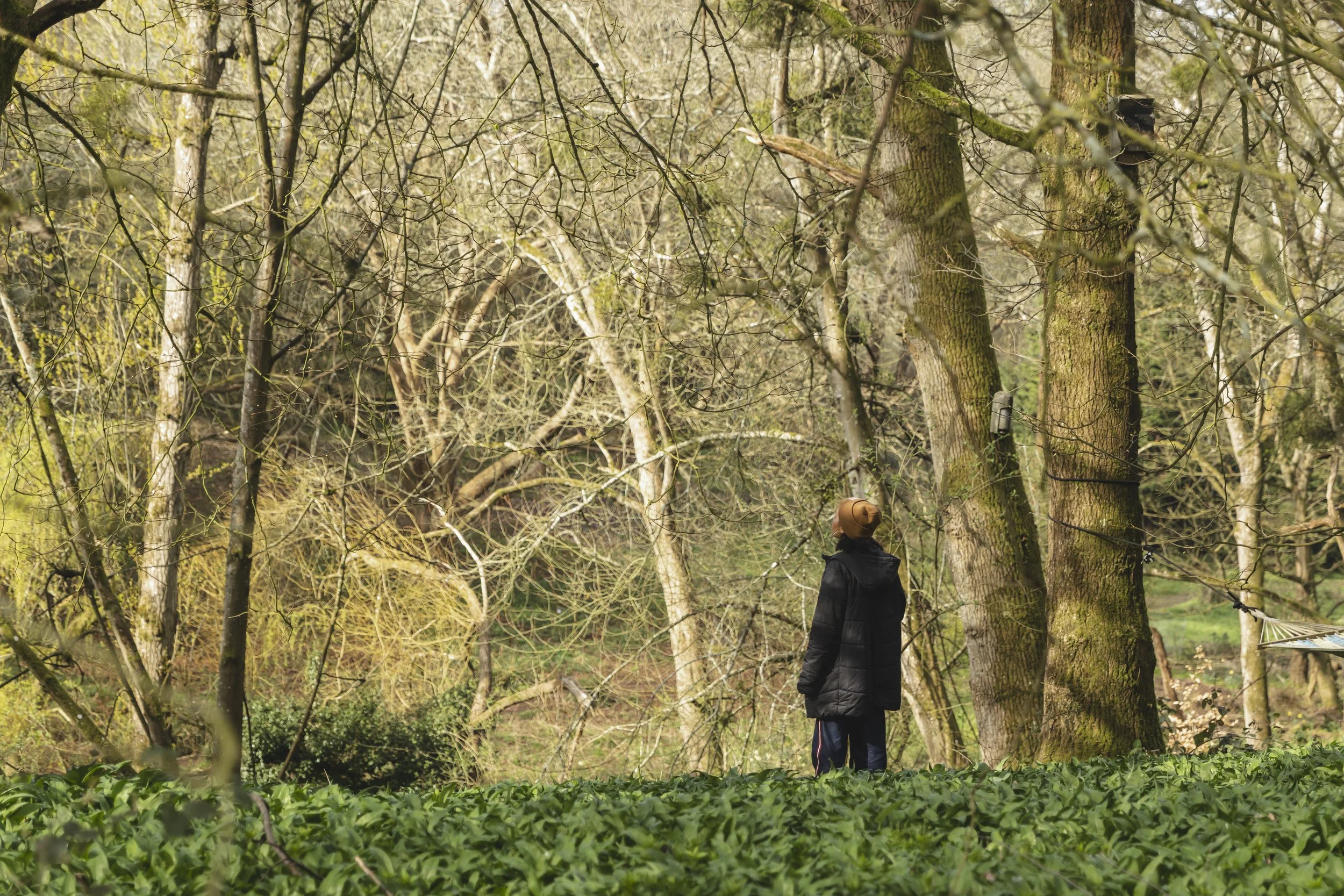
A Sound in the Woods participant soaking in the outdoor air
Creating the conditions for trust
So our focus is simple, but intentional.
We create the conditions where people can settle.
That means:
Slowing the pace
Removing pressure to perform
Offering invitation instead of expectation
We pay close attention to how the space is held:
How people are welcomed
How the group forms
How silence is allowed
This aligns closely with the work of Amy Edmondson, who describes psychological safety as the shared belief that it’s safe to take interpersonal risks.
In practice, for us, that looks like:
Being able to try something without getting it right
Being able to pause without explanation
Being able to contribute without fear of judgement
For teams, leaders, and facilitators, this is the foundation everything else depends on.
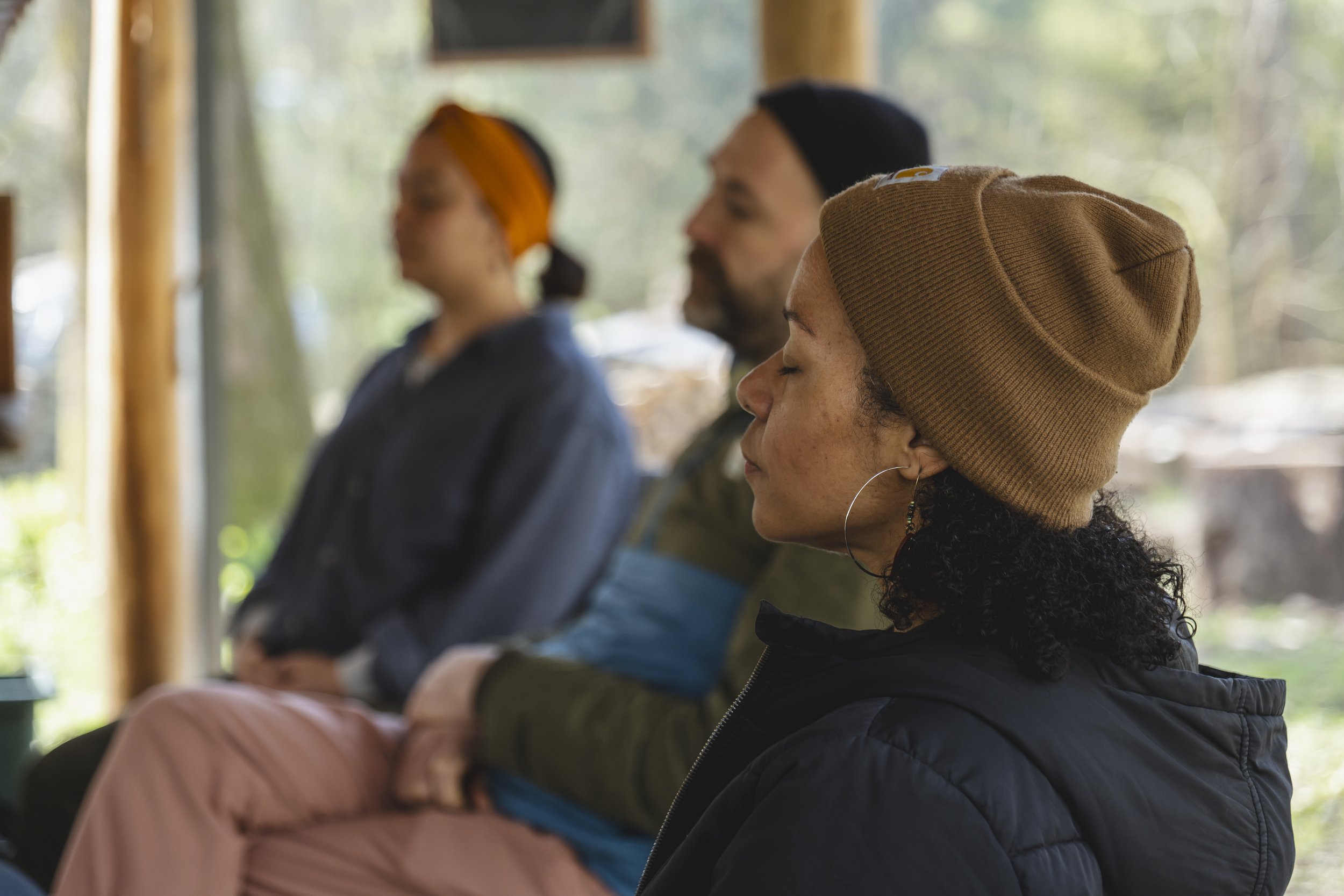
Participants sharing a quiet moment before the music making begins
Why the environment matters
There is a reason we, at Sound in the Woods, work in natural spaces. The setting plays a bigger role than we often acknowledge.
In nature, the nervous system experiences something different:
Fewer demands
Less noise
More space
There’s no urgency to respond. No constant stream of input.
Instead, there’s a quieter backdrop:
Light shifting through trees
Natural, layered sound
Open space without expectation
This has a direct effect: People begin, intuitively, to slow down.
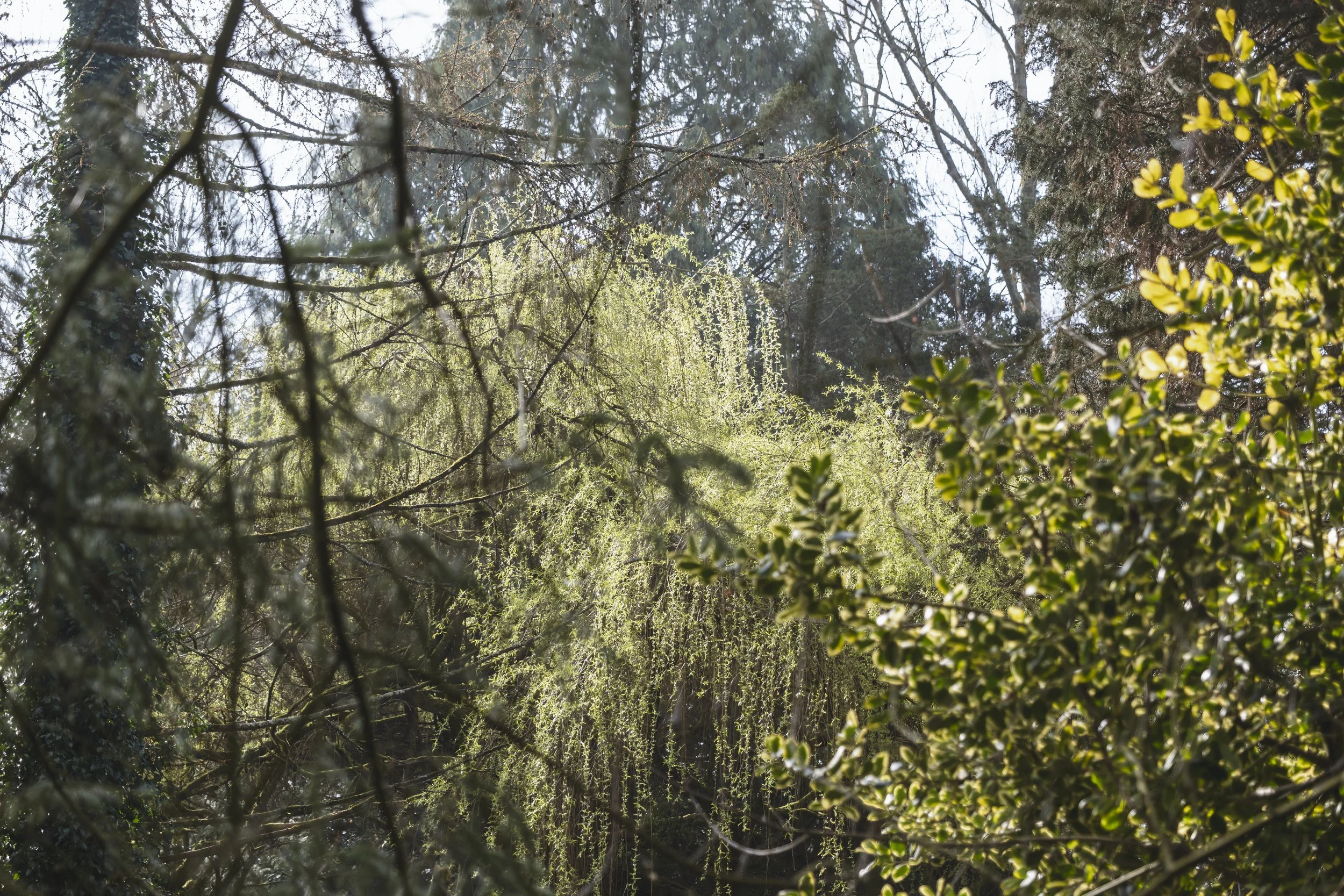
Nature is both the backdrop AND an active player in the process
Letting attention settle
In most environments, attention is pulled in multiple directions.
Here, that pull softens.
We find that attention starts to land on simple things:
The rhythm of walking
The texture of sound
The space between moments
And when attention settles, people do too.
This is where a different kind of awareness begins to awaken; one that supports creativity, connection, and presence.
A different quality of participation
From this place, we see something shift in how people engage.
There’s less self-consciousness. More listening. More responsiveness.
You start to see:
Ideas emerging without overthinking
People building on each other’s contributions
A sense of shared rhythm
Mistakes lose their weight. Silence becomes part of the process.
This is where group creativity becomes something collective, rather than something individuals feel responsible for getting right.
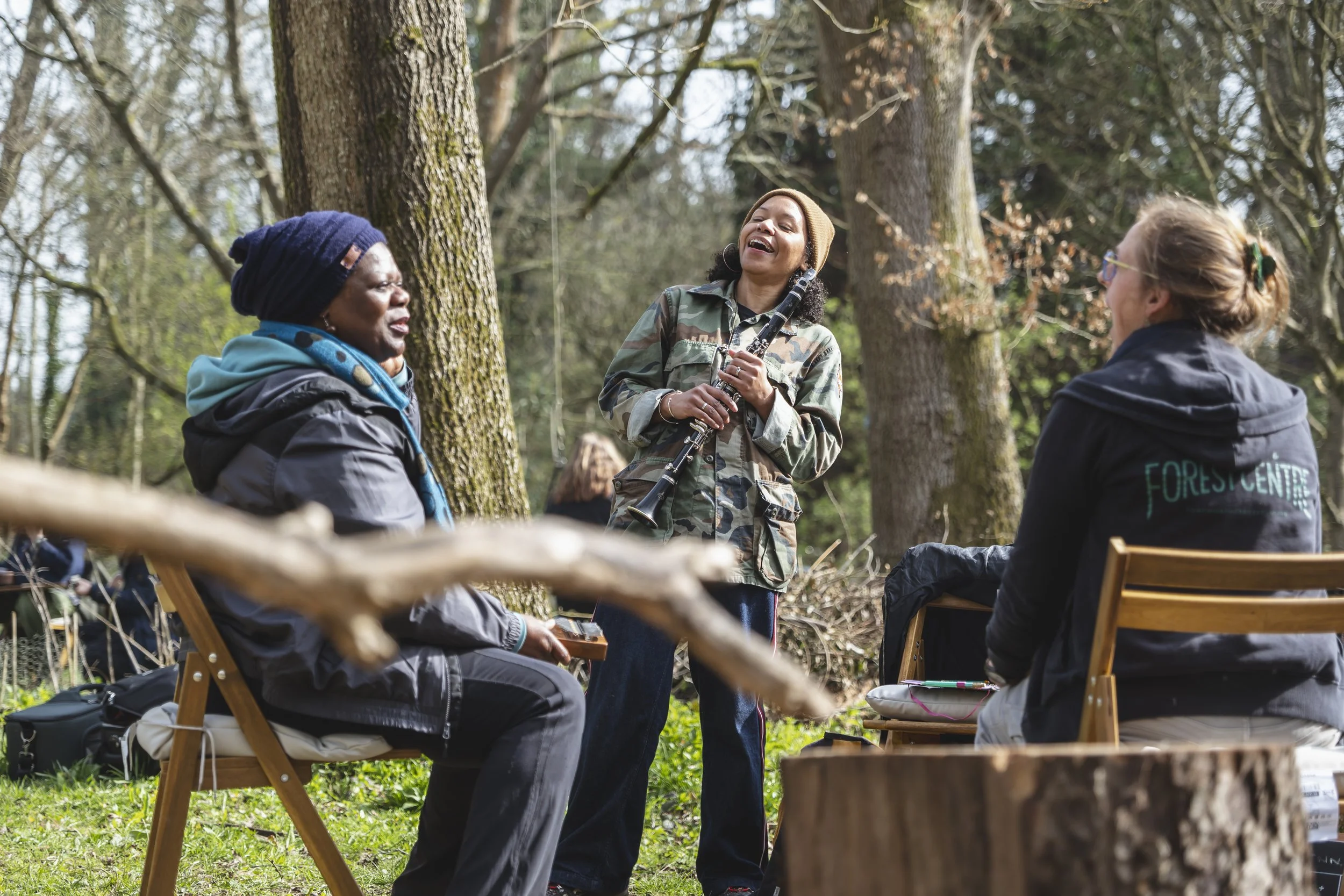
Small groups explore music and sounds together
Building from the ground up
Everything we do follows a simple sequence:
1: Safety
2: Connection
3: Expression
Not the other way around.
We don’t push people to create.
We create the conditions where creativity can emerge naturally.
For anyone working with groups, whether in education, leadership, or facilitation, this order matters.
Skip the first step, and everything else becomes harder (and more expensive).
Space changes what’s possible
When people feel stuck, the instinct is often to add more:
More structure. More input. More solutions.
But often, what’s needed is less.
Less noise. Less urgency. Less pressure.
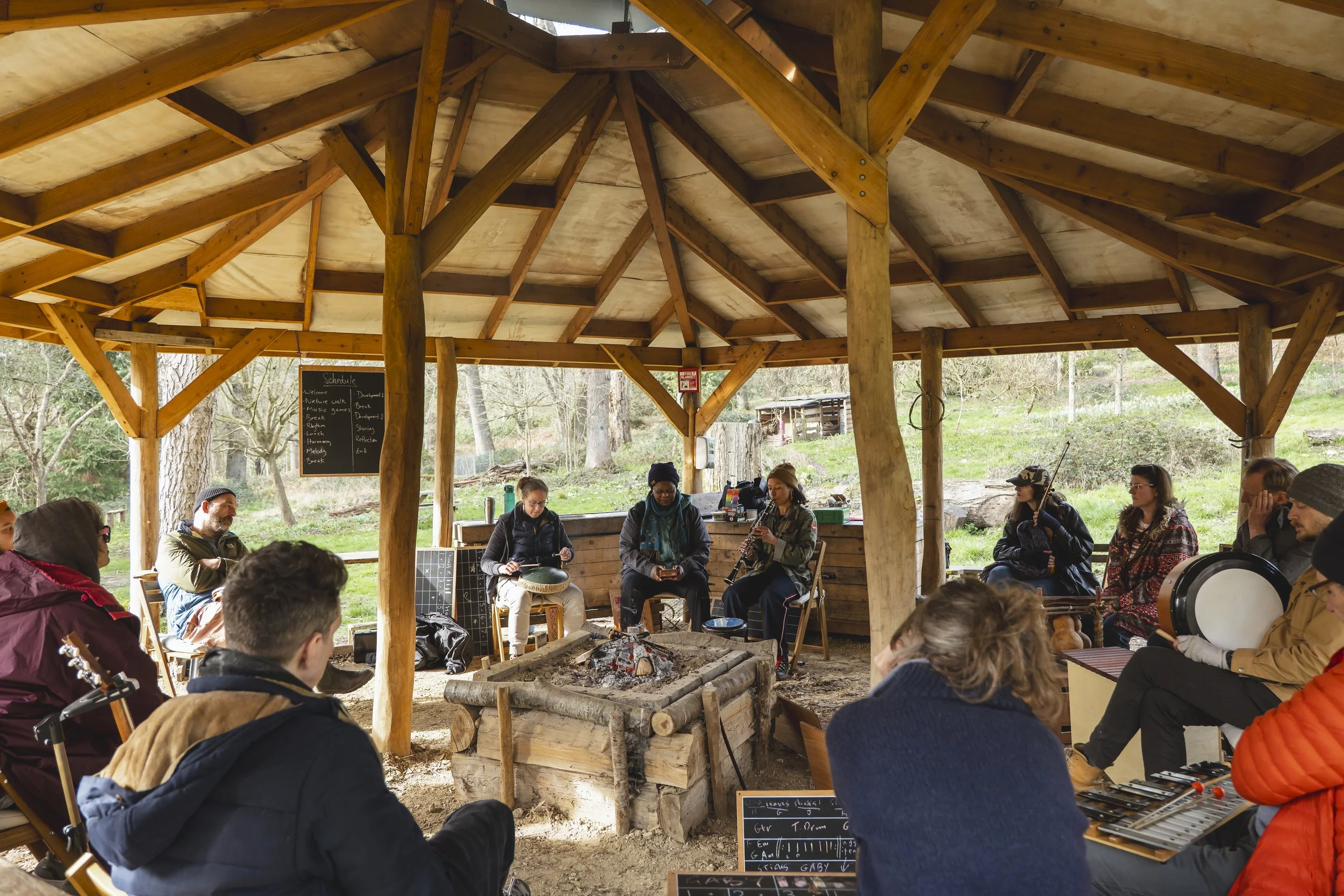
The music starts to connect
A different starting point
That’s what the woods offer.
Not just a setting, but a shift in how people arrive, relate, and create.
Because when people feel at ease, something important happens.
They stop managing themselves, and start engaging with what’s actually there.
And what’s actually there, waiting to be given oxygen, is pure magic.